Parents of disabled children are no different to other parents. They like a night off. An evening free from child-wrangling responsibilities is a wonderful thing.
R.E.S.P.I.T.E. Find out what it means to me.
We’re incredibly lucky because my parents are picture-book perfect grandparents who do not protest - at least not out loud to us - when we take advantage of their good nature and dump, sorry entrust, the kids to ’em.
They know the rules with my daughter. She knows they know. Nanna cooks her splendid healthy teas, and her legendary no-sugar fruit cake. Grandad takes on the ‘chasing round the house’ duties with my little boy.
So on Friday we sloped off at lunchtime, to journey through the rain and traffic to see friends in Liverpool. An uproarious night ensued. Taverns and ale were involved. And chat. A lot of chat. The high volume of which had a catastrophic effect on what had been just a slight sore throat at the beginning of the night. By our return on Saturday afternoon I was mute. This is an uncharacteristic state of affairs for me, I have to admit. And today I can still only manage a strangulated squawk.
I had a marvellous time on my night out. Not as marvellous as my husband, though. Because he got to have a night out followed by three days of peace. Now that’s what I call a proper respite.
I do bang on a lot about Prader-Willi Syndrome. You might have noticed.
Most people have never heard of the syndrome, and anything I can do to help change that fact, I will.
But I'd completely forgotten about this malarkey.
I used to work in local newspapers, and a colleague had left to work on the BBC's local TV news show. She phoned me to ask if she could do a feature on my daughter's condition as part of a series on childhood obesity.
I said yes.
So here it is, lower down on the page. Scroll down a bit to see it in all its three minute glory.
I would like to share some observations with you.
1) It's a broad brush stroke piece, but it's accurate, and well-meaning. More could probably have been said about the background of the older children in it, many of whom would have been diagnosed as teenagers rather than as babies. (Genetic testing had since improved drastically since they had been born).
2) I can still remember the rising panic in my head in the swing park as I genuinely thought I had got myself stuck in the "another dinner" sentence FOREVER.
2) I hardly recognise my old home. I have since moved, but not that long ago. It's just that when I knew they'd be filming, I tidied the arse out of my house. No, that doesn't mean I sent my husband packing. I mean I cleaned it as it had never been cleaned before.
3) With the benefit of hindsight, the film actually has a subtext about adult obesity: I'm three stone heavier now, Dear God.
4) I know I'm biased, but my little girl is as cute as something that is very cute. Times a hundred.
Video is the Look East Feature on Prader-Willi Syndrome, aired in August 2004.
One of the hardest things about living with Prader-Willi Syndrome is that there is no cure.
Your child is not going to wake up one day and be free of the condition.
But research is going on, and every now and again a little chink of light shines through the clouds.
At the moment, the light is emanating from a drug called oxytocin. An endochrinologist in France has been trying to discover if oxytocin can benefit people with PWS. Adult patients were injected (in the nose!) with the drug, (with others receiving placebos), and their behaviour then monitored. Researchers also tested their grasp of social interaction and ability to recognise emotions.
Over the next two days - in comparison with those given placebos - Prader-Willi patients given oxytocin were more trusting, less sad, less disruptive and had fewer conflicts with others, and scored more highly in tests which evaluated social understanding.
The research has also indicated that oxytocin neurons may play a physiological role in ingestive behaviour as “satiety neurons” in the human hypothalamus. Translated into plain English, this means they could help someone with Prader-Willi feel something they have never felt before: full up.*
A trial is currently underway using oxytocin nasal spray. This news is not to be sniffed at. (Do you see what I did there?).
Meanwhile, there’s another new drug in PWS town, too. Researchers in Australia are looking at Exenatide, marketed as Byetta, which is used as a daily injectable treatment for diabetes, which increases insulin secretion by acting on the pancreas. It’s the side effects of this drug which could prove useful in the battle to control PWS: mild weight loss, and appetite suppression.**
Of course, there is a caveat with all this. While the word ‘breakthrough’ is whizzing round my head, I know these two pieces of research are new, small scale, and need years and years of robust development and testing. They might, after all this, prove ineffective.
But they could, potentially, help my daughter. And that's a bit of hope to hang on to, goddammit.
Now I’m going to have to lie down. I just used a whole host of words with more than three syllables and provided links to scientific studies. My brain hasn’t hurt like this since I did poorly in my GCSE chemistry exam.
EDIT: In the comments below, Fazackerly mentions this very interesting talk by scientist Paul Zak on oxytocin - which he calls 'the moral molecule': Paul Zak: Trust, Morality And Oxytocin. If you have a few minutes spare, it's fascinating stuff.
Video is Thomas Dolby - She Blinded Me With Science
I went to a meeting at my daughter’s special school last night, where some of the staff were giving parents information about a trip coming up.
It’s a PGL ‘multi-activity’ holiday. Thousands of children go on them every year. They stay in lodges, and take part in things like rifle-shooting, raft building, archery, orienteering, abseiling, climbing, and fencing.
For most families it would really be nothing out of the ordinary. But it’s an AMAZING thing to me.
Imagine this: Three days and two nights away from home, in a strange environment, when you can’t cope well with change. Days packed with physical activities, which are challenging and even scary - especially if your muscles don’t work that well, spinal surgery means you can’t bend your back, and your stamina isn’t great. Menus that contain some foods you’re not allowed, so you have to be rationed whilst others can get stuck in. And all of this alongside schoolmates whose own set of idiosyncracies, weaknesses, and behavioural issues can upset you.
I wouldn’t want to do it. I don’t think I’d have the bottle.
But my girl, my hypotonic, titanium-rodded, routine-loving girl, can't wait to go.
There are many parts to my daughter’s unique personality. But there’s a word that describes a beautiful and surprising slice of her soul. And that word is intrepid.
She’ll have a wonderful adventure. Now I’ve just got to find £150 to pay for it.
Song is Natalie Merchant - Adventures of Isabel, based on a poem written by Ogden Nash for his seven-year-old daughter, Isabel.
It's a huge issue. I mean, it still stops me in my tracks when I actually think about it, even after all these years of living with my daughter's Prader-Willi Syndrome.
She never feels full up. We have to be rigid and regimented about mealtimes and portions and punctuality, and she courageously sticks to the rules. But her brain just does not tell her that she's had enough. We have to do that for her.
But sometimes it's good to turn the issue on its head. There is a flip side: By God, she enjoys her food.
Watching my daughter eat is a sight to behold. She doesn't dive in. She gets herself steady and comfortable, grips her knife and fork, and starts the slow, methodical, demolition of her meal.
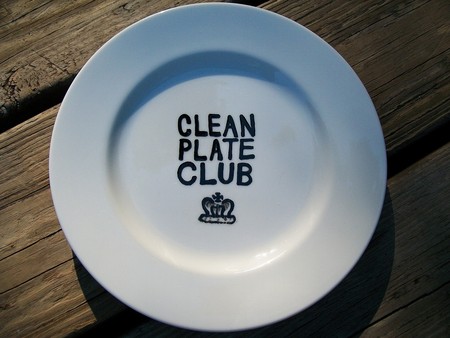
Every spoonful is savoured. Head down, her hair flopping over her face, she will leisurely hoover up every last pasta shell or grain of rice. She'll scrape the lining off the bottom of every yoghurt pot. She is the Founder, the Secretary and the goddamn President of the Clean Plate Club.
She'll try ANYTHING. Recent favourites are a spoonful of lime pickle alongside a rogan gosh. She'll have crab, cockles, and sardines. Brussels, cauliflower, beetroot, radishes, and spinach. Muesli. Flaming hot Thai green curry. Pickled onions. Salads, casseroles, tagines, stir-frys and gumbo. Separately, obviously. Although, technically, I suppose, she would quite happily eat all of these together...
She's a chef's dream.
The toddler is another story.
Video is Dr John - Let The Good Times Roll (from the album Dr John's Gumbo)
Last night, I stood up, behind a microphone, in the upstairs room of a pub, in front of a room of strangers (see yesterday’s post: True).
I took a deep breath and I told my ten-minute-long story. Despite my nerves, I told exactly the story I wanted to tell, exactly the way I wanted to tell it.
It was about those traumatic few weeks after my daughter was born. I’ve written about this on the blog (mostly in my first few posts back in June last year).
I chucked in the odd gag, to lighten the mood. A joke about my enormous knockers went down OK. You’re usually guaranteed a giggle from the men if you mention big boobs - apparently it’s the ghost of Benny Hill armed with a psychic tickling stick.
But there was one thing I spoke about for the first time. Something that was very hard to admit. I’ve just got off the phone to my mum, and she asked me what the “big secret” was that I had promised to “reveal”. (I think I got a bit over-dramatic in yesterday’s post).
I couldn’t tell her on the phone. It sounded too cold, too stark.
So, sorry, Mum, as usual, you can find out all the stuff I’m too tongue-tied to say in real life by reading this. I know, I wasn’t too tongue-tied last night, but they were strangers, and the light was dazzling, and I wasn’t actually looking anyone in the eye...
Just as I thought long and hard about sharing my story last night, I’ve thought long and hard about sharing my “script” here on the blog.
And I’m going to do it.
I would apologise for the length, but hell, I had to learn this baby off by heart, so you’re getting the lot! Oh, and Mum? Sorry for swearing.
TRUE STORIES TOLD LIVE
Thirteen years ago, I was very, very pregnant. (Not just fat like now). I’d been in to see my consultant when I’d gone a week past my due date, and he’d examined me and booked me in to be induced.
This was the cue for friends to give me lots of advice on how to make the baby come naturally. The top three tips were raw pineapple, curry and sex. I wasn’t exactly sure which order to have them in, or, indeed, if I was supposed to combine them.
Nothing worked. (Interestingly, though, I have since adopted "raw pineapple, curry and sex" as a mantra for life, and it's going great).
So we trotted along to hospital on the allotted day, and that was when everything began to go wrong.
The baby was the wrong way up. And it had also decided to, how can I put it, “use the facilities before checking out of the hotel". So I was rushed for an emergency Caesarian.
I’ll say this for the NHS: they give good drugs. The anaesthetist asked me how tall I was as I was about to be taken into surgery, presumably checking dosage levels. "5ft 5in," I told him, starting to feel pleasantly spaced out from the injection. One of the nurses pumped the foot pedal to lower my trolley bed a little. "Hang on!” I said. “I’m only about 5ft now...”
And in I went. Up went a little screen, much rummaging went on behind it, and much grumbling came from the senior consultant. He wasn’t happy. He glared at me and said: “Why didn’t we know this baby was breech? You must have seen your consultant. They really should have picked this up. Who was it?”
I took great delight in telling him. “You.”
The rummaging continued, now accompanied by Olympic levels of harrumphing. And then, suddenly, amazingly, my baby was here. It was a girl. A beautiful girl. My Josie.
At first, we had no idea anything was wrong. Looking back now, I can see in the photos that she was blue around her mouth and her fingers and toes were the same colour. But everything seemed perfect, apart from the fact that she wouldn’t feed. This surprised me, because let me tell you, my tits were frankly enormous. So I had the Good Breastfeeding Cop, Bad Breastfeeding Cop treatment from two nurses. Nothing doing. Good Cop finally took pity on me and sneaked me a bottle of formula milk, but Josie couldn’t even manage that. She didn’t seem to be able to suck.
The paediatrician did his routine checks, lifting up her arms to look at her muscle tone. They flopped back down on the bed with a thump. He walked into the corridor with a colleague, closing the door behind them. I watched through a porthole window. Watched them deep in conversation. And I knew. I knew something was seriously wrong.
Five minutes later she was whisked into special care. Bad Breastfeeding Cop nurse couldn’t look at me. Good. Silly cow. Josie was put in an incubator, and covered with tubes and wires. No-one could tell us what was wrong and we had to wait. For weeks. In a stiflingly hot parallel universe filled with tiny babies struggling for life. And they ran test after test after test.
And then the time came. The invitation to join the people in white coats in that room. You can spot that room easily. It’s as drab and grey as all the other rooms except it has cheerful curtains and a box of man-size tissues on the table. This is a room that positively reeks of sadness and disappointment and lives turned upside down. A bit like Butlins.
The blood tests and investigations had finally produced a result: our daughter had a very rare chromosome disorder. We were given a print-out of a website page, telling us what it meant.
As I read the details, I was physically winded. It felt like someone had punched me in the chest. All the air was knocked out of my lungs.
Its name was Prader-Willi Syndrome (named after the doctors who discovered it). It affects the part of the brain which controls appetite, growth and sexual development. People with PWS are short, have learning disabilities, are socially immature, can’t have children and are unlikely ever to be able to live an independent life.
And although they’re too weak to feed as a baby, children with PWS grow up to have an insatiable appetite, and never physically feel full up. They are always hungry. But, because their bodies can’t convert fat to muscle efficiently, they have to be on a strict diet. For life. If their food intake isn’t controlled, they will suffer from life-threatening obesity. It’s a double whammy. Torture squared.
Oh. And there’s no cure.
Thirteen years on and that time, that bleak, bleak time seems like somebody else’s nightmare.
I wish I'd known then what I know now. I wish I'd known then how our daughter would slowly grow stronger, and with the aid of various casts, braces, wheeled walking frames and contraptions, would learn to stand, to walk, to run, to dance.
I wish I'd known then how each milestone reached would bring such elation.
I wish I'd known then that the uncontrollable appetite could usually be managed - to some degree - with lots of planning and distraction. And with the help of her limited understanding of fractions. “Mummy, if I cut this in half, is it twice as much?” “Yes. Yes darling, it is.”
I wish I could have looked five years forward and seen myself gripping my girl’s hand tight when I walked along with her as she skipped through the gates for her first day at school.
I wish I could have seen the look of glee on her face as she belted out a pretty stirring rendition of “Sheena is a Punk Rocker” to her new teaching assistant when she learned her name was...well...Sheena (who I’m not sure was a punk rocker. Except possibly on weekends).
But there’s one other thing I wish. And this is the difficult one.
Before we got my daughter’s diagnosis, in amongst the hundreds of tests was an MRI. And the doctors had showed us an image of Josie’s brain. Showing up in stark contrast to the grey, walnutty swirls were five or six little, white wiggly lines, like tiny worms.
“What are they?” I asked. “What do they mean?”
“We don’t know for certain,” they said. “They could be scar tissue. And they could indicate permanent brain damage.”
It turns out, of course, they didn’t mean that at all. They were a red herring. To this day, no-one knows what they are, but they don’t seem to have had any effect on her life. They’re just there.
But we didn’t know that at the time. I looked at that scan, and I thought of my daughter lying motionless on that hospital bed, and I thought she’d be like that for life. Trapped. Unable to breathe, unable to talk, unable to feed herself, unable to move.
It shames me to my bones, but I wished her dead. I wished my beautiful, new, baby girl had never been born.
God I want to go and slap my stupid face. I want to yell at myself: “Don’t you KNOW? Everything is going to be ALL RIGHT!”
Because it is.
Now I know I’m a lucky person. I was lucky enough to meet my husband, the strongest, kindest man I have ever known, when I was too young to actually appreciate that’s just what he was. To be honest, I just thought: nice face, nice arse.
And after some false starts we were lucky enough to make Josie. The ingredients might have been a bit off, but we made her. And do you know what? She’s a happy girl. She leads a good life. She was Cinderella in the special school panto (that was a show and a half). She goes camping with the Guides. She loves Justin Bieber. I’m not going to pretend life hasn’t been tough. (The Bieber love has been particularly hard to stomach). But God, it’s also been FUN. And joyful.
We’ve even been lucky enough to make another one. A boy, who's three now, with no health problems. Who - if I’m brutally honest - is 10 times the trouble that his sister is. The little bastard.
So now I’ve said my secret out loud, it feels good. Like opening a valve and letting that toxic thought finally escape. I think it’s time. Time to move on.
Video is Piney Gir - Outta Sight (One of the storytellers at True Stories is always a musician who also performs a song, and Piney Gir was last night's troubadour.)
In an upstairs room in a London pub, in front of 80 or so strangers, I’ll be speaking for 10 minutes, without notes.
You can probably guess what my story is about: my unique and lovely daughter.
Some of the speech will refer to things I’ve mentioned on this blog. It will also reveal an uncomfortable truth I’ve never said out loud before.
I hope it goes well. I hope I’ve judged the tone right. I hope I can get through it.
I’m slightly worried that most of my practising has been done as an internal monologue whilst swimming. Although if the dry-land recitation is looking wobbly, a friend has promised to don a pair of red shorts and throw me a life-ring.
At the risk of drowning in swimming analogies, I'm going to be throwing myself in at the deep end. I need to pace myself, and - most importantly of all - I must remember to breath.
I’ll see you in the changing rooms afterwards.
Video is John Williams - Theme From Jaws
Video is Frightened Rabbit - Swim Until You Can't See Land